3/11/2025 - Reviewed by Jeanine Davis, NC Alternative Crops and Organics Program, Department of Horticultural Science, NC State University.
This report is from studies conducted in 2000-2002 and remains here for reference.
Studies have been conducted at six research stations in North Carolina to develop commercial production systems for medicinal herbs with potential economic value for North Carolina growers. We offer here some of the information gained from these studies. Please keep in mind that this is preliminary information and these are not recommendations. Yields are estimates from research plots and gross returns are based on prices found on-line at the site given. Some plants have not been established long enough to obtain yield data.
Estimated yields per acre are based on 109-4 x 100 ft beds/acre. Yield ranges may include 1-3 rows/bed.
Estimated gross returns are based on a list of medicinal herb prices provided by a U.S. manufacturer in fall, 2002. These are subject to change at any time.
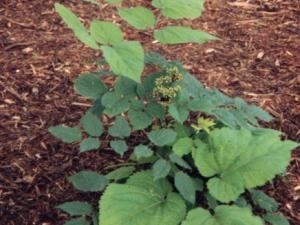
Common Name: American Spikenard
Botanical Name: Aralia racemosa L.
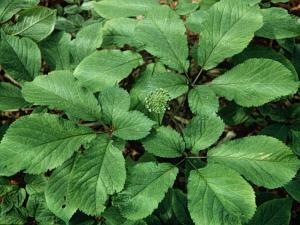
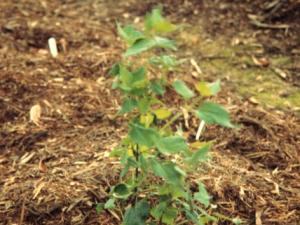
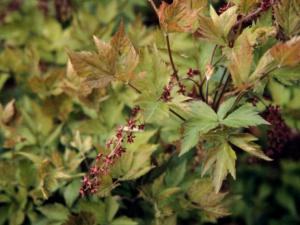
Spikenard (Aralia racemosa) grows 1-10 feet tall and bears elongated flower stalks covered with yellow-green flowers which develop into purple berries. It grows in rich woods and riverbanks and is easy to cultivate. The roots are traditionally harvested in the fall and used to treat many ailments, including backaches. |
|
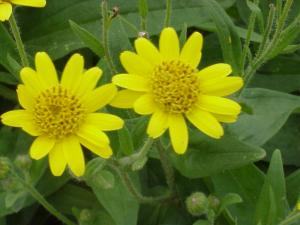
Common Name: Arnica
Botanical Name: Arnica chamissonis
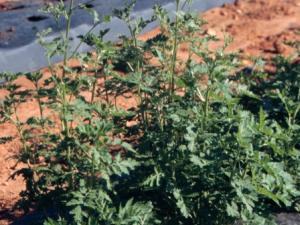
Arnica flowers, leaves, and roots are used to make healing ointments to relieve pain and inflammation. Arnica is esily cultivated in a n open field setting. Arnica is currently being grown on black plastic, white plastic, and bareground in the upper piedmont of North Carolina and on white plastic in the coastal plains of North Carolina. |
|
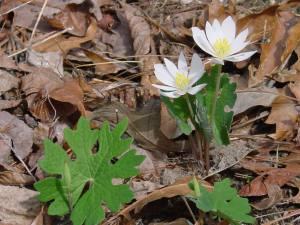
Common Name: Bloodroot
Botanical Name: Sanguinaria canadensis L.
Bloodroot is an attractive, low-growing plant with lobed, waxy leaves which puts on pretty white flowers in very early spring. It can often be found growing in deep woods. It spreads naturally by rhizomes and seeds and can be easily propagated by both. The root of the bloodroot, which "bleeds" when cut, has a long been used by Native Americans and has proven antimicrobial activities. It can be toxic, however, and should not be used casually.
Bloodroot is currently in demand because of its use in an animal feed product that is manufactured in Germany and sold in Europe. We have several studies on-going in western North Carolina on the propagation and cultivation of bloodroot. Results from these studies will be available starting in spring 2004.
More bloodroot photos |
|
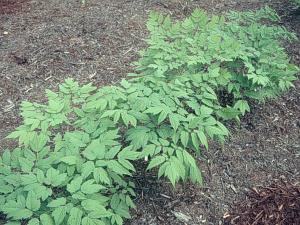
Common Name: Black Cohosh, Cohosh, Bugbane
Botanical Name: Actaea racemosa (L.) Nutt.
Black cohosh is a common, but very popular, woman's herb used in menopause and childbirth. Its immense popularity has caused concern for its well-being and cultivation is encouraged. Fortunately, it is easy to cultivate. It is an attractive shrub, which can grow quite tall, with delicate, lacy-type foliage. It thrives in rich, moist soil in about 80% shade. The roots are harvested in early fall for medicinal use. It can be propagated by dividing the rhizomes in spring or fall. Seed propagation is difficult, but we have a graduate student currently working on this problem.
|
|
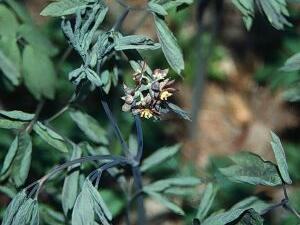
Common Name: Blue Cohosh
Botanical Name: Caulophyllum thalictroides (L.) Michx
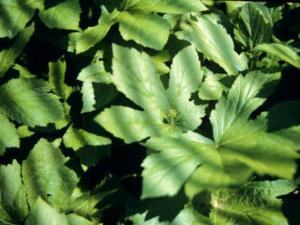
Blue Cohosh is another beautiful plant that is commonly found in hardwood forests in southern Appalachia. The plant grows to about 3 feet in height and early in the year can have very blue foliage. In spring it puts on yellowish-green flowers which develop into a cluster of blue-purple berries. The rhizomes can be divided in spring or fall and the plant will spread naturally. Seeds are difficult and slow to germinate and should be kept moist. Blue cohosh is another woman's herb, the root of which was traditionally used as a childbirth aid. It is easy to grow but the market is small. |
|
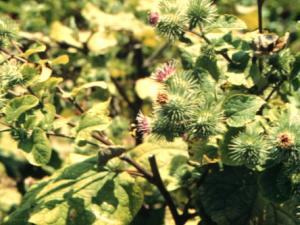
Common Name: Oriental Burdock
Botanical Name: Arctium lappa
Variety: Takinogawa long
Yield: 6-17 lbs/100 ft row - 654-1853 lbs/acre
Dried root returns: $1,177.20 - 3,335 40/acre
Direct seeding worked well. Big healthy plants |
|
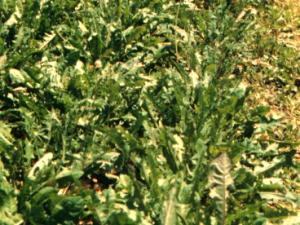
Common Name: Dandelion
Botanical Name: Taraxacum officinale
Yields: 7-41 lbs/100 ft row (763-4469 lbs/acre) Dried roots
Yields: 4-16 lbs/100 ft row (436-1744 lbs/acre) Dried tops
Returns: $1,716.75 - 10,055.25/acre root
Returns: $1,177.20 - 4,708.90/acre tops
Excellent growth at higher elevation, foliage upright and full. Did poorly at lower elevation; poor germination and plants were creeping and sparce. |
|
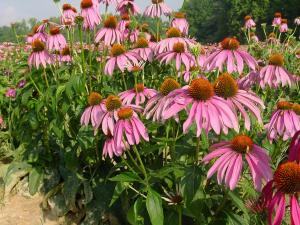
Common Name: Purple Echinacea
Botanical Name: Echinacea purpurea
Yields: 5-32 lbs/100 ft row (535-3,488 lbs/acre) dried tops
Returns: $963.00 - 6,278.40/acre tops
Direct seeding into beds worked well. Direct seeding into black plastic mulch produced larger plants than transplanting into plastic. Looks great with good vigor and color. |
|
Common Name: Feverfew
Botanical Name: Tanacetum (chrysanthemum) parthenium
Yield: 7-22 lbs/100 ft row (763-2,398 lbs/are) dried tops
Returns: $2,060.10 - 6,474.60/acre
Transplanting was more reliable than direct seeding. Compact, dark green bushy plants. |
|
Common Name: American Ginseng
Botanical Name: Panax quinquefolius L. |
|
Common Name: Goldenseal
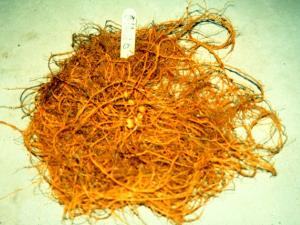
Botanical Name: Hydrastis canadensis L. |
|
Common Name: Gotu Kola
Botanical Name: Centella asiatica
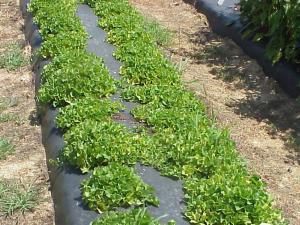
Gotu kola leaves are used fresh and dried. It has many medicinal uses including wound healing. It is also used in Ayurvedic medicine. It is being grown on black plastic in the upper piedmont of North Carolina |
|
Common Name: Mayapple
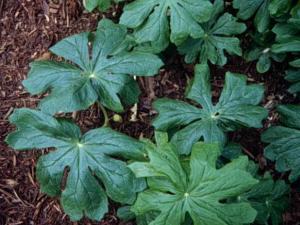
Botanical Name: Podophyllum pelatum L. |
|
Common Name: Milk Thistle
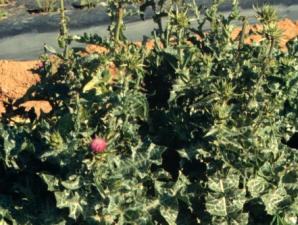
Botanical Name: Silybum marianum
Comments: Transplanting into black plastic worked very well. Very vigorous plants. |
|
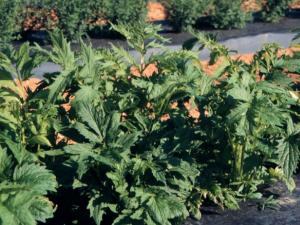
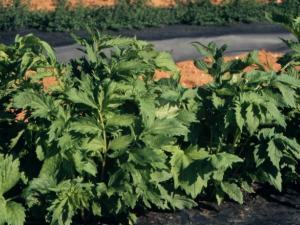
Common Name: Motherwort
Botanical Name: Leonurus cardiaca
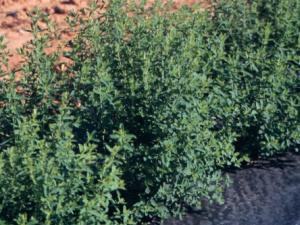
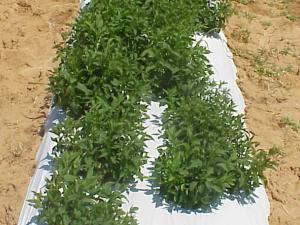
This herb is used to treat heart conditions. Little research has been conducted on it either for uses or production. In 2002 it is being studied on black plastic, white plastic, and bareground in the upper piedmont of North Carolina, and on white plastic in the coastal plains of North Carolina. |
|
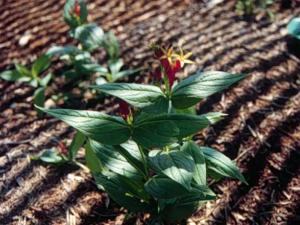
pinkroot spigelia |
Common Name: Pinkroot spigelia
Botanical Name: Spigelia marilandica L. |
|
Common Name: St. Johnswort
Botanical Name: Hypericum perforatum
Variety: Topas
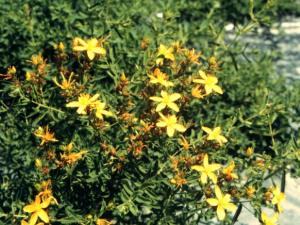
Direct seeding and transplanting worked well. Dark green, upright habit, good color, good vigor. |
|
Common Name: St. Johnswort
Botanical Name: Hypericum perforatum
Variety: Wild
Direct seeding and transplanting worked well. Good color, compact plants, low growing creeping habit with good vigor. |
|
Common Name: Skullcap
Botanical Name: Scutellaria baicalensis
Variety Name: Baikal
Direct seeding and transplanting worked well. Plants small but healthy with good color.
|
|
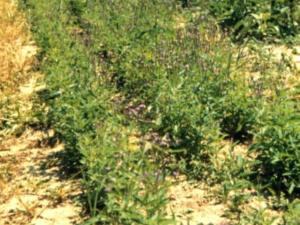
Common Name: Skullcap
Botanical Name: Scutellaria lateriflora
Yield: 5-15 lbs/100 ft row (545-1,635 lbs/acre) dried tops
Returns: $2,583.30 - 7,749.90/acre
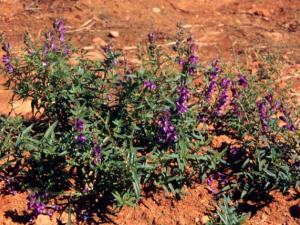
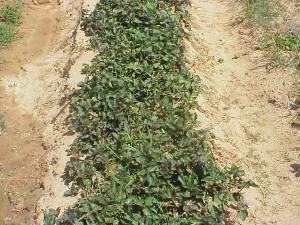
Skullcap is being studied on black plastic, white plastic, and bareground in the upper piedmont of North Carolina and on white plastic in the coastal plains of North Carolina. |
|
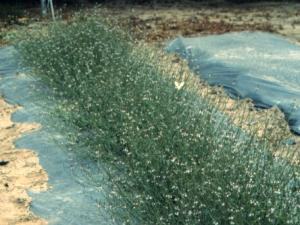
Common Name: Spilanthes
Botanical Name: Spilanthes spp
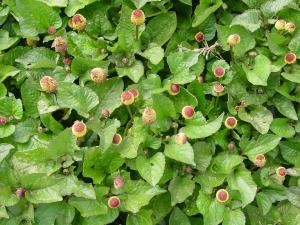
The entire plant is used. Commonly known as the toothache plant, it is considered an immune system stimulant and has antiparasitic and antibacterial properties. Spilanthes is being studied on black plastic, white plastic, and bareground in the upper piedmont of North Carolina, and on white plastic in the coastal plains of North Carolina. |
|
Common Name: Stinging Nettle
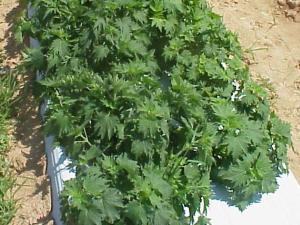
Botanical Name: Urtica dioicca
Yield: 4-12 lbs/100 ft row (436-1,308 lbs/acre) dried tops
Returns: $1,177.20 - 3,531.60/acre
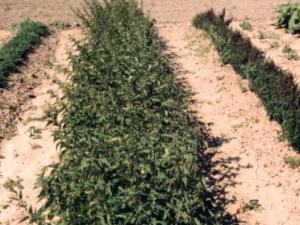
Spring seeding and transplanting worked well. Big lush plants, good color at lower elevation. More open growth at higher elevation. |
|
Common Name: Valerian
Botanical Name: Valeriana officinalis
Variety: Arterner Zuchtung
Yield: No data-1st harvest in 1999
Transplanting worked best. Healthy, dark green but small, some flagging in heat. |
|
Common Name: Valerian
Botanical Name: Valeriana officinalis
Variety: Common
Transplanting worked best. Dark green color, big plants. |
|
Common Name: Vervain
Botanical Name: Verbena officinalis
Yield: 3-11 lbs/100 ft row (327-1199 lbs/acre) dried tops
Transplanting worked well. Beautiful, dense plants. |
|
Common Name: Blue Vervain
Botanical Name: Verbena hastata
Yield: 9 lbs/100 ft row (981 lbs/acre) dried tops.
Returns: $3,433.50-$3,924.00/acre
Spring seeding was poor. Fall seeding was good. |
|
Common Name: Virginia Snakeroot
Botanical Name: Aristolochia serpentaria L. |
|
Common Name: Yellowroot
Botanical Name: Xanthorhiza simplicissima Marsh |